
Proton Therapy for Lymphoma
Treat Lymphoma With Proton Therapy
Lymphoma is the appearance of cancer cells in the lymphatic system, which fights germs throughout the body. The white blood cells or lymphocytes grow out of control and cause swollen lymph nodes and growths throughout the body.
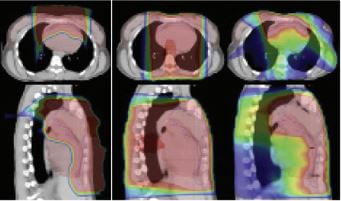
Comparison image – Proton Therapy is on the left, Photon Therapy is on the right
How Is Lymphoma Treated?
Lymphoma is a highly treatable form of cancer. Many people with lymphoma are cured with chemotherapy and radiation and go on to live long, healthy lives. For this reason, minimizing the radiation dose on healthy tissues – such as the heart, lungs, breast and esophagus – is necessary to reduce the risk of developing future health problems as a result of radiation exposure.
Proton therapy, a form of radiation, stops at the site of the tumor, limiting unnecessary radiation exposure to nearby organs like the heart, lungs, breast and esophagus. This can be especially helpful as many patients with these highly curable cancers are young adults and adolescents with many decades of life left. Proton therapy for lymphoma has been shown to minimize the long-term impact related to heart disease, lung cancer and breast cancer, especially for people who have previously received chest radiation.
Patient Experience

“The little things, like free valet parking and being greeted by name, made a big difference. The building is beautiful and you don’t feel like you’re in a hospital,” says Maryland Proton Treatment Center Patient Marie Barton. Read her story here.
The Maryland Proton Treatment Center (MPTC) Uses Protons to Treat a Variety of Lymphomas:
Hodgkin’s Lymphoma
Non-Hodgkin’s Lymphomas
- B-cell lymphomas (diffuse large B-cell lymphoma, follicular lymphoma, chronic lymphocytic leukemia, mantle cell lymphoma, marginal zone B-cell lymphomas, Burkitt lymphoma, hairy cell leukemia, primary central nervous system lymphoma)
- T-cell lymphomas (precursor t-lymphoblastic lymphoma/leukemia, peripheral t-cell lymphomas)
Recurrent Lymphoma: Proton therapy is safely used for recurrent cancers, sparing additional radiation to adjacent organs like the heart, lungs, breast and esophagus.
Understanding the Proton Therapy Treatment Process
At the Maryland Proton Treatment Center, every lymphoma cancer treatment plan is customized to your unique diagnosis and health needs. We aim to deliver highly targeted care while supporting your comfort and well-being.
Here’s what you can expect:
Initial Consultation: During your initial consultation, you will meet with our expert team, including a radiation oncologist, to review your medical history and determine if proton therapy is right for you. Our radiation oncologists are trained to deliver radiation in a variety of modalities, which means they can discuss all radiation options to ensure you are comfortable with your care plan. If proton therapy is right for you, our billing department will help find out if your insurance covers proton therapy.
CT Simulation and Treatment Planning: We use advanced imaging to map your tumor and design a precise, personalized plan. These scans help us prepare your body position to ensure accurate proton therapy treatment.
Daily Treatment: Proton therapy begins within two weeks of the simulation. These outpatient sessions are typically 30 minutes, five days a week, with most patients returning to daily activities right after. The length of treatment depends on your specific treatment plan but generally lasts three to eight weeks.
Completion: Upon completing your last treatment, you will ring the bell at the “Ring in Hope” wall, a symbol that closes the door on this chapter of life and opens the door to a healthy future.
Follow-Up and Ongoing Monitoring: Within a month of your final treatment, you will come back for a follow-up visit to track your progress. Following that, imaging and regular check-ins help us further track your progress and make any needed adjustments.