
Treat Ovarian Cancer With Proton Therapy
Ovarian cancer begins in the ovaries or the far end of the fallopian tubes. This disease that affects the female reproductive system is estimated as the fifth highest cause of cancer deaths among women. Fortunately, with advances in treatments, death rates have declined since the early 2000s.
There are several classifications of ovarian cancers:
- Epithelial ovarian tumors start in the outer surface of the ovaries. Those considered borderline spread to areas outside of the ovary, like the lining of the abdomen, and those that are malignant can spread to other parts of the body, often fatally.
- Malignant epithelial ovarian tumors are classified by type, most often as serous carcinomas. These are not identifiable by sight, but by how fast they grow and how they respond to therapy.
Other cancers of the ovary are rarer. For example:
- Primary peritoneal carcinoma (PPC) starts in the lining of the fallopian tubes and spreads along the pelvis and abdomen. Although PPC develops in women who still have their ovaries, it may also appear in those who have had their ovaries removed. Similarly, fallopian tube cancer develops locally, in the fallopian tubes.
- Ovarian germ cell tumors are most often benign, but less than 2% are cancerous. Germ cell tumors appear in different types, most commonly as teratomas, dysgerminomas, endodermal sinus tumors and choriocarcinomas. The tumor may also be a mix of several subtypes. In addition, ovarian stromal tumors occur in about 1% of ovarian cancers, in the connective or supporting tissues of the ovaries.
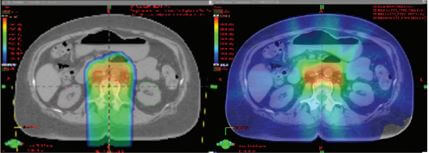
Comparison image – Proton Therapy is on the left, Photon Therapy is on the right
How Is Ovarian Cancer Treated?
Depending on the determined stage of the cancer, treatment options include surgery, chemotherapy, radiation therapy, targeted drug therapy, hormone therapy and immunotherapy. In early stages, treatment may begin with chemotherapy and radiation, when the tumor is small and has not spread to other areas of the body. If the tumor is confined to the ovary, surgery may remove the tumor and be followed by chemotherapy and radiation. Additionally, women who don’t plan to have children in the future may opt for a radical hysterectomy, which additionally includes removal of the uterus, pelvic lymph nodes, ovaries and fallopian tubes.
When considering radiation, proton therapy is often preferred to treat ovarian cancer. Proton therapy applies a concentrated dose of radiation directly to the diseased area, limiting harm to the vital, healthy tissues surrounding it that are often exposed with traditional photon therapy. In addition, side effects are minimized with proton therapy.
The Maryland Proton Treatment Center (MPTC) Uses Proton Therapy to Treat a Variety of Ovarian Cancers:
- Serous carcinoma
- Clear cell carcinoma
- Mucinous carcinoma
- Endometrioid carcinoma
- Primary peritoneal carcinoma
- Fallopian tube cancer
- Ovarian germ cell tumors (teratoma, dysgerminoma, endodermal sinus tumors, choriocarcinoma)
- Ovarian stromal tumors
Understanding the Proton Therapy Treatment Process
At the Maryland Proton Treatment Center, every ovarian cancer treatment plan is customized to your unique diagnosis and health needs. We aim to deliver highly targeted care while supporting your comfort and well-being.
Here’s what you can expect:
Initial Consultation: During your initial consultation, you will meet with our expert team, including a radiation oncologist, to review your medical history and determine if proton therapy is right for you. Our radiation oncologists are trained to deliver radiation in a variety of modalities, which means they can discuss all radiation options to ensure you are comfortable with your care plan. If proton therapy is right for you, our billing department will help find out if your insurance covers proton therapy.
CT Simulation and Treatment Planning: We use advanced imaging to map your tumor and design a precise, personalized plan. These scans help us prepare your body position to ensure accurate proton therapy treatment.
Daily Treatment: Proton therapy begins within two weeks of the simulation. These outpatient sessions are typically 30 minutes, five days a week, with most patients returning to daily activities right after. The length of treatment depends on your specific treatment plan but generally lasts three to eight weeks.
Completion: Upon completing your last treatment, you will ring the bell at the “Ring in Hope” wall, a symbol that closes the door on this chapter of life and opens the door to a healthy future.
Follow-Up and Ongoing Monitoring: Within a month of your final treatment, you will come back for a follow-up visit to track your progress. Following that, imaging and regular check-ins help us further track your progress and make any needed adjustments.